
On May 25, 1979, O’Hare airport witnessed the worst airplane accident ever in the US: AA Flight 191 took off, right away tilted to the left, and then crashed back down to earth and exploded, killing all 271 people aboard. How did it happen?

Crime solving gets up close and personal, will justice too? In the age of self-service petrol pumps and restaurants, and the rising cost of labour, it is not surprising that some police forces in the UK have resorted to virtually telling complainants to solve relatively `minor’ crimes themselves.
While the ethical implications of this development may be debatable, it’s not as if the people told to find their own criminal quarries would be totally at sea.
A quick crammer course comprising DVDs of all the latest crime serials on TV -financed by local police stations as part of their community outreach programmes, perhaps -should bring most of them up to scratch.
Given the renewed popularity of non-official fictional sleuths like Sherlock Holmes and Hercule Poirot, there would be no dearth of takers either. And it will not be long before apps are devised to help these DIY detectives get their man, as crime-solving games already abound on the internet for wannabe gumshoes to hone their skills.
Then the police forces in Britain can presumably divert precious manpower from hunting for stolen cars and lost cats to tracking major criminal cases and saving the world -or at least their small towns -from terror attacks.Or so it is hoped. The only foreseeable problem would be, of course, if some of these irate victims find the perpetrators and decide to go in for DIY justice too.
Mahathir assaulted' judicial independence, and active civil society, these actions are both bizarre and regressive, Chief Justice Tun Arifin Zakaria reminded Datuk Seri Najib Razak today of his duty as prime minister to uphold judicial independence, urging him to ensure a clear separation of powers between the judiciary and the remaining two arms of government Therefore, it is incumbent on the PM to defend the independence of judiciary
Why is Prime Minister Najib resorting to the use of The Sedition Act to silence critics of his government? A confident government is always prepared to engage its citizenry. Could he be responding to Tun Dr. Mahathir’s criticisms of his leadership and policies? And that in order to show that he is actually not a weak leader, he has resorted to strong arm tactics to prevent Malaysians from speaking up about politics, social policy and other matters. Given his wide experience in government and politics, he should know that efforts to silence mounting critical voices will be counterproductive. The best option is to communicate more effectively with civil society, address its concerns and take action. Silence is not golden when it comes public dissent."Using sedition laws to silence peaceful criticism is the hallmark of an oppressive governmentHome Minister Datuk Seri Dr Ahmad Zahid Hamidi denied accusing non-Malays of arrogance at a speech at the Umno Bukit Bendera delegate conference yesterday, blaming the reporter from a local paper for the mistake.


Malays, when threatened, must be prepared to organise themselves and fight back. All these comments against Hamidi are collected by his aides and distributed to Umno members forthe Umno AGM, to show that he is very pro-Malay.
The Home Minister pushing ahead with aggressive positioning on controversial issues also without adequate verification, claimed that he would not endorse those who made provocative remarks against non-Muslims and warned of police action against those The Home Ministry said that pursuing sedition charges was inappropriate because there was no evidence of inciting violence.Our Sedition law is archaic and draconian. It was introduced by the British to keep leaders in jail. to abolish the Sedition law. Unfortunately, we still have it. We are continuing it with even after so many years. Sedition law is a weapon in the hand of the state. It can be misused by the state in many ways. If somebody is charged with sedition, it will take a long time to get the bail and come out. The punishment is also very harsh.
Home Minister Ahmad Zahid Hamidi should also be charged under the Sedition Act for accusing non-Malays of being arrogant, Gerakan said today.Gerakan's Youth wing deputy chief Andy Yong said although he was not in favour of the Act, especially with it being so “easy” to charge law lecturer Azmi Sharom, he did not see why the same could not be applied to Zahid. parliament should immediately repeal the colonial-era sedition law, UMNO using to silence peaceful political dissent, Human Rights Watch said today.Najib's government should drop sedition cases against prominent activists such as A defiant Azmi Sharom , who was charged with sedition as it was a blow to academic freedom and freedom of expression.My statements were based on established case laws and democratic principles
There are enough laws to prosecute those who make disparaging racial and religious remarks but selective investigation and prosecution is a cause for worry, a former attorney-general and lawyers said.
Insisting that the Sedition Act be removed from the statute book, they said the law on sedition was stacked against an accused and it gave the prosecution an upper hand in obtaining a conviction.
They said this in response to Suhakam chairman Tan Sri Hasmy Agam’s call to Putrajaya that the Sedition Act be repealed and replaced with a National Harmony Act as promised by Prime Minister Datuk Seri Najib Razak in 2012.
Hasmy said recently, several opposition politicians had been prosecuted for allegedly making “seditious remarks” but the Suhakam chairman noted that there were other laws which could have been used to handle such matters.
Hasmy (pic, left) said Suhakam recognised that freedom of speech had its limits but Putrajaya must uphold the principle of equality.
Former attorney-general Tan Sri Abu Talib Othman said there was no point enacting new laws when the implementation was questionable.
“Every person is equal under our law. To be effective, all laws must be enforced fairly ,” said Talib who was the A-G between 1980 and 1993.
He said these days many were charged with sedition and there was a public perception of selective prosecution.
Talib said he had framed charges against a few individuals under the Sedition Act but it was done fairly to obtain a conviction.
He expressed reservation on the prosecution of DAP national vice-chair Teresa Kok over her controversial satirical video “Onederful Malaysia” last February.
“Is this case a suitable benchmark for sedition in this country?” he asked.
Talib, who is also a former Suhakam chairman, added that there were also adequate laws to maintain public order and national security.
Criminal lawyer Datuk Baljit Singh Sidhu said the prosecution of opposition leaders for sedition only lent support that the law was used to muzzle legitimate dissent.
He said Putrajaya would have done its homework before Najib announced the repeal of the law.
“Yet, the public prosecutor sees it fit to charge opposition leaders and those against the establishment over the past one year.”
He said the conduct of current Attorney-General Tan Sri Abdul Gani Patail ran contrary to the promise made by Najib.
Lawyer Edmund Bon (pic, right) said there were sufficient provisions in the Penal Code and also the Malaysian Communication and Multimedia Act 1988 to act against those who used race and religion to make hate speech.
“I am for responsible freedom of speech but against using the Sedition Act,” he said.
Bon said under the sedition law, it was a presumption that the accused was responsible for inciting hatred when the burden of proof in criminal law was always with the prosecution.
“During trial, the prosecution need not prove intention of the accused and this makes it easier for them to secure a conviction.”
Lawyer Abd Shukor Ahmad said the intention of the sedition law, which originated in England, no longer existed.
“It was enacted to curb anyone from making derogatory remarks against the state during the reign of absolute monarchy,” he said.
Shukor said the law had lost its relevance in a parliamentary democracy and open government system.
“We are still stuck in a time warp if the law remained in our statute book,” Shukor said, adding that the legislation was against basic rights of citizens to criticise their elected government or offer differing views.
Lawyers for Liberty executive director Eric Paulsen said individuals would be reluctant to make hate speech using race and religion if they were reprimanded severely by the media, community and political leaders.
“These individuals will think twice to use race and religious card to champion an issue,” he said.
Paulsen, however, lamented that these individuals became bolder because they obtained tacit support from politicians and the mainstream media.
He said offenders could be charged under the Penal Code as it gave them a fair level of playing field in putting up a defence unlike the Sedition Act.


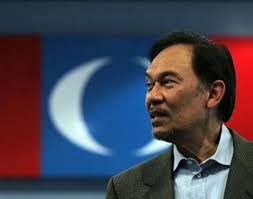


Najib have to do his part in the ballot box coming GE 14 and ensure UMNO not voted coming GE 14 Prime minister Najib should called for a 10-year moratorium on inciting hatred believe that these incidents are instigated and provoked by the selfish politicians and religious groups to create fear and control of people of different race and religion, color and creed in order for them to sustain their illegitimate reqime. Najib please take immediate action against Home Minister for such an idiotic statement. should take immediate action to suspend Home Minister Ahmad Zahid Hamidi This minister is trying to create hatred among Malays and non-malays.fast emerging as the sharp edge of what appears to be an aggressive strategy for Malay mobilisation for UMNO
Umno Youth chief Khairy Jamaluddin today said he shamelessly feel proud over their evil deeds.
Why is Prime Minister Najib resorting to the use of The Sedition Act to silence critics of his government? A confident government is always prepared to engage its citizenry. Could he be responding to Tun Dr. Mahathir’s criticisms of his leadership and policies? And that in order to show that he is actually not a weak leader, he has resorted to strong arm tactics to prevent Malaysians from speaking up about politics, social policy and other matters. Given his wide experience in government and politics, he should know that efforts to silence mounting critical voices will be counterproductive. The best option is to communicate more effectively with civil society, address its concerns and take action. Silence is not golden when it comes public dissent."Using sedition laws to silence peaceful criticism is the hallmark of an oppressive governmentHome Minister Datuk Seri Dr Ahmad Zahid Hamidi denied accusing non-Malays of arrogance at a speech at the Umno Bukit Bendera delegate conference yesterday, blaming the reporter from a local paper for the mistake.
“I’ve been called arrogant because I allegedly accused non-Malays of arrogance but it’s not true, I have never accused non-Malays of arrogance,” he said.
“But the reporter from The Sun (who wrote that article). Please brush up on your Malay before you write the news in English,” he said.
He went on to say he had been “looking for the reporter” without success.
“Even though I am the Home Minister and I have the police force under my authority, I will not abuse my power
“So if the reporter has the guts, whether he is a male or female, step out and talk to me. If he made a mistake and retracted and apologised, I will forgive him, if not, I will know what to do,” he warned.
He said the issue had then gone and he was accused of being against other races and religions.
“I am not anti other religions and races. Islam never teaches us to be anti other religions or races,” he said.
He reminded reporters to adhere to their journalistic ethics.
A Malaysiakini reporter, Susan Loone, was detained under the sedition act following reports lodged against her over an article titled “Disoalsiasat selama 4 jam, dakwa dilayan seperti penjenayah (Interrogated for four hours, treated like a criminal)” that was published on Monday.
The article, quoting Penang state executive councillor Phee Boon Poh, reported the conditions experienced by Phee when he was arrested in relation to the crackdown on Penang volunteer patrol unit (PPS) members on Sunday.
“Problems arise when writers with their own portals and those in the social media write whatever they like without thinking how it affects the country,” he said.
“If they are truly liberal and for freedom of speech, then don’t delete those comments that do not support them or that pointed out their faults,” he said.
He warned reporters not to use the online medium to damage the country’s image and told them not to take advantage of Putrajaya’s policy of openness by making slanderous statements.
“If a case is taken against them in court, and if they lose, they will say the court is unfair, if they win, they say court is fair, and if we win, they say the court is unfair and they lobby foreign non-governmental organisations to support them,” he said.
He reminded Malaysians that political reforms should be based on Malaysian culture and not modelled after other countries
Malays, when threatened, must be prepared to organise themselves and fight back. All these comments against Hamidi are collected by his aides and distributed to Umno members forthe Umno AGM, to show that he is very pro-Malay.
The Home Minister pushing ahead with aggressive positioning on controversial issues also without adequate verification, claimed that he would not endorse those who made provocative remarks against non-Muslims and warned of police action against those The Home Ministry said that pursuing sedition charges was inappropriate because there was no evidence of inciting violence.Our Sedition law is archaic and draconian. It was introduced by the British to keep leaders in jail. to abolish the Sedition law. Unfortunately, we still have it. We are continuing it with even after so many years. Sedition law is a weapon in the hand of the state. It can be misused by the state in many ways. If somebody is charged with sedition, it will take a long time to get the bail and come out. The punishment is also very harsh.
Home Minister Ahmad Zahid Hamidi should also be charged under the Sedition Act for accusing non-Malays of being arrogant, Gerakan said today.Gerakan's Youth wing deputy chief Andy Yong said although he was not in favour of the Act, especially with it being so “easy” to charge law lecturer Azmi Sharom, he did not see why the same could not be applied to Zahid. parliament should immediately repeal the colonial-era sedition law, UMNO using to silence peaceful political dissent, Human Rights Watch said today.Najib's government should drop sedition cases against prominent activists such as A defiant Azmi Sharom , who was charged with sedition as it was a blow to academic freedom and freedom of expression.My statements were based on established case laws and democratic principles
There are enough laws to prosecute those who make disparaging racial and religious remarks but selective investigation and prosecution is a cause for worry, a former attorney-general and lawyers said.
Insisting that the Sedition Act be removed from the statute book, they said the law on sedition was stacked against an accused and it gave the prosecution an upper hand in obtaining a conviction.
They said this in response to Suhakam chairman Tan Sri Hasmy Agam’s call to Putrajaya that the Sedition Act be repealed and replaced with a National Harmony Act as promised by Prime Minister Datuk Seri Najib Razak in 2012.
Hasmy said recently, several opposition politicians had been prosecuted for allegedly making “seditious remarks” but the Suhakam chairman noted that there were other laws which could have been used to handle such matters.
Hasmy (pic, left) said Suhakam recognised that freedom of speech had its limits but Putrajaya must uphold the principle of equality.
Former attorney-general Tan Sri Abu Talib Othman said there was no point enacting new laws when the implementation was questionable.
“Every person is equal under our law. To be effective, all laws must be enforced fairly ,” said Talib who was the A-G between 1980 and 1993.
He said these days many were charged with sedition and there was a public perception of selective prosecution.
Talib said he had framed charges against a few individuals under the Sedition Act but it was done fairly to obtain a conviction.
He expressed reservation on the prosecution of DAP national vice-chair Teresa Kok over her controversial satirical video “Onederful Malaysia” last February.
“Is this case a suitable benchmark for sedition in this country?” he asked.
Talib, who is also a former Suhakam chairman, added that there were also adequate laws to maintain public order and national security.
Criminal lawyer Datuk Baljit Singh Sidhu said the prosecution of opposition leaders for sedition only lent support that the law was used to muzzle legitimate dissent.
He said Putrajaya would have done its homework before Najib announced the repeal of the law.
“Yet, the public prosecutor sees it fit to charge opposition leaders and those against the establishment over the past one year.”
He said the conduct of current Attorney-General Tan Sri Abdul Gani Patail ran contrary to the promise made by Najib.
Lawyer Edmund Bon (pic, right) said there were sufficient provisions in the Penal Code and also the Malaysian Communication and Multimedia Act 1988 to act against those who used race and religion to make hate speech.
“I am for responsible freedom of speech but against using the Sedition Act,” he said.
Bon said under the sedition law, it was a presumption that the accused was responsible for inciting hatred when the burden of proof in criminal law was always with the prosecution.
“During trial, the prosecution need not prove intention of the accused and this makes it easier for them to secure a conviction.”
Lawyer Abd Shukor Ahmad said the intention of the sedition law, which originated in England, no longer existed.
“It was enacted to curb anyone from making derogatory remarks against the state during the reign of absolute monarchy,” he said.
Shukor said the law had lost its relevance in a parliamentary democracy and open government system.
“We are still stuck in a time warp if the law remained in our statute book,” Shukor said, adding that the legislation was against basic rights of citizens to criticise their elected government or offer differing views.
Lawyers for Liberty executive director Eric Paulsen said individuals would be reluctant to make hate speech using race and religion if they were reprimanded severely by the media, community and political leaders.
“These individuals will think twice to use race and religious card to champion an issue,” he said.
Paulsen, however, lamented that these individuals became bolder because they obtained tacit support from politicians and the mainstream media.
He said offenders could be charged under the Penal Code as it gave them a fair level of playing field in putting up a defence unlike the Sedition Act.
While Home Minister Datuk Seri Ahmad Zahid Hamidi's remarks on "arrogant non-Malays" can be considered seditious, the country's moderates are against the minister being charged with sedition.
Instead, they said the way to thumb noses at such "racist remarks" is to move forward and show that all Malaysians can come together.
Global Movement of Moderates chief executive officer Datuk Saifuddin Abdullah felt that instead of charging the Umno vice-president under the draconian Sedition Act, leaders should just counter his statement with facts.
"This looks like incitement on the grounds of race but maybe Zahid has no intention to cause any harm. Whatever it is, I am not for charging him under the current Sedition Act. We should just rebut him and the people can judge for themselves," he told The Malaysian Insider.
However, what was more important, said the Umno member, was the promotion of inter-racial respect.
"There will be hiccups, but that's part of life. We just have to soldier on, observe restrain from making negative remarks and push the unity agenda steadfastly forward," he said.
Najib have to do his part in the ballot box coming GE 14 and ensure UMNO not voted coming GE 14 Prime minister Najib should called for a 10-year moratorium on inciting hatred believe that these incidents are instigated and provoked by the selfish politicians and religious groups to create fear and control of people of different race and religion, color and creed in order for them to sustain their illegitimate reqime. Najib please take immediate action against Home Minister for such an idiotic statement. should take immediate action to suspend Home Minister Ahmad Zahid Hamidi This minister is trying to create hatred among Malays and non-malays.fast emerging as the sharp edge of what appears to be an aggressive strategy for Malay mobilisation for UMNO
Umno Youth chief Khairy Jamaluddin today said he shamelessly feel proud over their evil deeds.
India's sedition law, section 124A of the Penal Code, prohibits any words either spoken or written, or any signs or visible representation that can cause "hatred or contempt, or excites or attempts to excite disaffection," toward the government. In a landmark ruling in 1962, Kedar Nath Singh vs State of Bihar,the Supreme Court ruled that unless the accused incited violence by their speech or action, it would no longer constitute sedition, as it would otherwise violate the right to freedom of speech guaranteed by the Constitution.
The court stated: "[C]riticism of public measures or comment on Government action, however strongly worded, would be within reasonable limits and would be consistent with the fundamental right of freedom of speech and expression. It is only when the words, written or spoken, etc. which have the pernicious tendency or intention of creating public disorder or disturbance of law and order that the law steps in to prevent such activities in the interest of public order."
The International Covenant on Civil and Political Rights, which India ratified in 1979, prohibits restrictions on freedom of expression on national security grounds unless they are provided by law, strictly construed, and necessary and proportionate to address a legitimate threat. Such laws cannot put the right itself in jeopardy.
"Peacefully speaking out against human rights violations is at the heart of free speech, not sedition," . "The repeated misuse of the sedition law should be brought to a stop."New Delhi: Dr Mrinal Satish, Associate Professor of Law at National Law University, Delhi spoke to IBNLive on sedition charges slapped against Kashmiri student, who celebrated the victory of Pakistan Cricket team. Here is his view:
Legally speaking, cheering for a Pakistani Cricket team or some other team is not sedition. If the information I got is correct, these students from Kashmir studying at a Meerut University did not do anything to topple the Indian government nor did they do something against the integrity of the country. The concerned university or the college has the right to deal with such cases. Even the decision of the university or the college can also be challenged in a court.edition law was framed to target, terrorise and imprison mainly freedom fighters. Mahatma Gandhi wanted us to do away with it after the Independence. We have not done that. I my opinion, we already have several strong laws to deal with such issues in the nature of sedition. I don't think that we need a separate Sedition law for that.
Sedition law can be misused in many ways.
cricket has players from all countries. If an Indian player loses his wicket to a Pakistani bowler and a fan or fans of that IPL team cheer, by this logic who knows tomorrow something like this might happen again.
Many legal experts also believe that it is an archaic law, which needs to be scrapped. Some say it's necessary to protect the nation's integrity.
The sedition law, introduced by the British in India in 1870, outlaws speech that "brings or attempts to bring into hatred or contempt, or excites or attempts to excite disaffection towards, the Government established by law in India." The penalty for running afoul of the statute: up to life imprisonment.
This is what the Sedition law says -
The Section 124A in The Indian Penal Code, 1860 deals with Sedition -
124A. 1[ Sedition.-- Whoever by words, either spoken or written, or by signs, or by visible representation, or otherwise, brings or attempts to bring into hatred or contempt, or excites or attempts to excite disaffection towards, 2[ the Government established by law in 3[ India], a 4[ shall be punished with 5[ imprisonment for life], to which fine may be added, or with imprisonment which may extend to three years, to which fine may be added, or with fine. Explanation 1.- The expression" disaffection" includes disloyalty and all feelings of enmity. Explanation 2.- Comments expressing disapprobation of the measures of the Government with a view to obtain their alteration by lawful means, without exciting or attempting to excite hatred, contempt or disaffection, do not constitute an offence under this section. Explanation 3.- Comments expressing disapprobation of the administrative or other action of the Government without exciting or attempting to excite hatred, contempt or disaffection, do not constitute an offence under this section.]


No comments:
Post a Comment