

The story of two Khalids - Khalid Samad, the just preserver of the sanctity of Islam; the defender of liberty, democracy and equity; and a true son of the country.
And Khalid Ibrahim, a self-serving recalcitrant who would not hesitate to resort to ruse, lie and deception, as long as the end justifies the means.
The good Khalid chooses to fight for justice, and we know that is never easy. It never has been and never will be. Whereas, the other Khalid chooses to fight for himself and cling on to power. The former exacts a toll and a price to pay; while the latter brings power and wealth.
I'd be proud and to happily accept someone with the integrity of Khalid Samad to be my prime minister; whether or not he's from an Islamic-based party.

Anwar asks PAS are you not ready to accept a woman leader,
Principles of a constitutional monarchy
According to one of the most important writers on the subject of constitutional monarchy, Walter Bagehot, the monarchy merely symbolises the unity of the national or in our case, state community; from the point of view of political power, the Sovereign in a constitutional monarchy has only three rights: “the right to be consulted, the right to encourage, the right to warn”.
Malaysia’s most distinguished jurist, Tun Mohamed Suffian bin Hashim in “An Introduction to the Constitution of Malaysia”, spells out the role of Rulers and Governors as “acting in accordance with advice”:
“A Ruler, though sovereign, has no autocratic powers. A Ruler and similarly a Governor must act in accordance with the advice of the state Executive Council or of a member of the Council (usually the Menteri Besar) acting under the general authority of the Council, except as is otherwise provided by the federal or state constitution…The Ruler or Governor is entitled, at his request, to any information concerning the government of the state which is available to the Executive Council. The Ruler or Governor is not a member of the Executive Council. Members of the Executive Council meet only among themselves, and thereafter the Menteri Besar or the Chief Minister submits the Executive Council’s advice to the Ruler or Governor…”
Nonetheless, a Ruler does have discretionary power in the performance of the following functions including: the appointment of the Menteri Besar; the withholding of consent to a request for the dissolution of the Legislative Assembly; request for a meeting of the Conference of Rulers; any function as Head of the Muslim religion or relating to the custom of the Malays; the appointment of an heir; the appointment of persons to Malay customary ranks, titles, etc., the regulation of royal courts and palaces.
How the soap opera unfolds from here will ultimately depend on how convention has been tempered by the precedent set in 2008 and the wisdom of the Sultan.
HRH Selangor Sultan has been at the vanguard and brought greater transparency into the public domain around elected politicians , leaving it to the “wisdom” of even as it outlined the “constitutional expectation” against such appointments and its own displeasure of them.Ruler’s request for more names to fill MB post creates impasse, says law expert. While in legal and constitutional terms, it may have lobbed ball into the hands of HRH Selangor Sultan made a strong moral argument. Since HRH Selangor Sultan as trustee of the Constitution, “constitutional morality” requires that those in “conflict with law and involved in offences of moral turpitude and corruption should not be allowed to discharge duty .
Khalid trying to save PAS from Hadi and gang

Hadi needs to keep a tight lid on infighting and internal power struggles before they get out of hand.
Outburst: If this indicates infighting within PAS faces a tough new test — where it is a swirl of insidious action.Hadi displeasure, ostensibly causing suppose the subject matter is now past the stage of further comments. Just wait for Sept 3 2014 and the matter would be resolved one way or the other. No doubt one fact is crystal clear.ostensibly causing PAS will break up infighting and creates the impression of a power struggle within the party. unable to call the shots or ensure that the party put out a unified message. This led to the impression, and reality, of stultifying policy paralysis. Constant political infighting and an overworked
Actually I don't see any problem even if PAS submits two names. After all the Sultan did say the names of people who can command the support of the majority of the state assembly. Anyone other than Azizah will not be able to command the support of the majority of the assembly. PKR and DAP can each submit the same name on the basis that they know of only one person who can command the support of the majority of the members of the State Assembly. Assuming the two names submitted by PAS are those of Azizah and Azmin, Azmin can continue to decline or if he does not then he can have the support of UMNO and PAS (13) and still he does not have the majority. Azizah will still be the MB. Coming out of all this is the sad reality that PAS cannot be trusted. What if PKR had actually won GE13 and this sort of thing occurs? What if DAP had actually used PAS's logo during GE13?
Why don't Mustapha Ali. Why don’t Mustapha Ali submit submit 13 names a better idea names, since the Sultan asks for more than 2 from each party. And if you believe what you are doing is right, then you should also convince the other two parties to do the same. In that way, we will have a neat dozen. That would enable the Sultan to have more choice for him to choose the best for the people of Selangor. What do you say, Mustapha?
PAS continues to snub Anwar Ibrahim by rejecting his plea and insisting that it will submit two names to the Selangor palace for the menteri besar post. In any democratic stance, only there can be a majority or a hung i.e. equal votes. In this case, Wan Azizah has already obtained the majority of 30 votes not counting the rest of the 13 Pas assemblypersons. Only one selection with majority is sufficient and all the Sultan has to do is appoint that person. The Sultan can not select on behalf of the Selangor voters whom becomes the Mentri Besar. Any other process or perceived conventions are ultravires to the constitution. Pas needs to understand the law when it has legislative representatives in the state assembly house.
Anwar: We respect Sultan's request but PR to stick to Azizah only
On Constitutional MonarchyThe rights to be consulted, to encourage and to warn
Walter Bagehot famously wrote in The English Constitution (1867) that the British monarch has three rights: the rights to be consulted, to encourage and to warn.
“To state the matter shortly, the sovereign has, under a constitutional monarchy such as ours, three rights — the right to be consulted, the right to encourage, the right to warn. And a king of great sense and sagacity would want no others. He would find that his having no others would enable him to use these with singular effect. He would say to his minister: “The responsibility of these measures is upon you. Whatever you think best must be done. Whatever you think best shall have my full and effectual support. But you will observe that for this reason and that reason what you propose to do is bad; for this reason and that reason what you do not propose is better. I do not oppose, it is my duty not to oppose; but observe that I warn.” Supposing the king to be right, and to have what kings often have, the gift of effectual expression, he could not help moving his minister. He might not always turn his course, but he would always trouble his mind.
The disquiet expressed by the palace over remarks regarding the Selangor menteri besar (MB) crisis is perfectly understandable, and to some extent, even justified.
The limits of a monarch’s discretionary powers in a functioning democracy has exercised the minds of many a constitutional lawyer the world over. The debate always intensifies and burnishes when there is intense political contestation; and a party feels that its mandate, so painstakingly won through elections, may be at stake.
Our own courts have several times adjudicated on the legality and propriety of a ruler’s exercise of discretionary power. Malaysian law reports attest to the abundant legal jurisprudence in this regard.
Indeed as recently as 2010, our highest Federal Court in the case of the two MBs – Nizar v Zambry – solemnly pronounced on the limits of a monarch’s discretion; and when and how the royal prerogative in the choice of MB should be properly exercised.
This is the precise question that is presented in the present episode. Not surprisingly then, this has ignited a rather animated debate; in the course of which, no doubt, considerable heat has been generated.
And this is how it should be. As the palace statement, with respect, correctly points out: "The sultan wants someone who will take care of the rakyat's needs and develop Selangor to higher levels".
And what better way to gauge the “rakyat’s needs” than have the rakyat itself provide its feedback – through the media and other recognised channels.
The rakyat chose the party that must govern. And their expectations as to who must helm the government to develop the state “to higher levels” must rank at par with that of the ruler’s.
That’s why an orderly and smooth transition – consonant with respect for the "constitution and established conventions", which is how the Federal Court phrased it in the Nizar case, is vital. And that, precisely, is what is being advanced.
In this context, it may be felt by some that the extension of the tenure of an MB who tendered his resignation on the basis that he had lost the support of the majority of the members of the Legislative Assembly – may be at odds with conventional practice and our judicial pronouncements.
Our Federal Court said that once this loss of majority confidence is made clear, then resignation must follow; indeed the Chief Judge said if the MB refuses to tender his resignation (as happened in the Perak case) “... the fact remains that the executive council is dissolved (which include the Menteri Besar) on account of the MB losing the confidence of the majority of the members of the Legislative Assembly”.
The Court went on to say: “Therefore, it is not necessary for the DYMM Sultan of Perak to remove Nizar and other members of the executive council”. In short the MB and his exco lose all legitimacy to continue to govern.
The challenging constitutional poser then is: in the light of this clear statement of the law, can the power to govern be extended? Indeed an intriguingly novel question.
Perhaps we can refer then to constitutional conventions established by the country on which our Westminster model of the constitution was crafted.
An authoritative constitutional authority says this, of the practice in England: “In the event of... resignation of the Prime Minister, the governing party would doubtless expedite its election procedures. If there were still to be substantial delay before a successor could be chosen, the Cabinet could be expected to bring forward a minister who would assume temporary leadership of the government, the Queen being invited to confirm his or her authority to act. Otherwise the Queen might call on the deputy Prime Minister or, if there were none, the Minister ranking highest in precedence to take this responsibility”.
Practically, this convention seems to suggest that it may not be quite appropriate to appoint in the interim a person who has lost majority support of the members of the assembly.
For then in whose name does the person rejected by majority of the assembly and the exco, rule?
The limits of a monarch’s discretionary powers in a functioning democracy has exercised the minds of many a constitutional lawyer the world over. The debate always intensifies and burnishes when there is intense political contestation; and a party feels that its mandate, so painstakingly won through elections, may be at stake.
Our own courts have several times adjudicated on the legality and propriety of a ruler’s exercise of discretionary power. Malaysian law reports attest to the abundant legal jurisprudence in this regard.
Indeed as recently as 2010, our highest Federal Court in the case of the two MBs – Nizar v Zambry – solemnly pronounced on the limits of a monarch’s discretion; and when and how the royal prerogative in the choice of MB should be properly exercised.
This is the precise question that is presented in the present episode. Not surprisingly then, this has ignited a rather animated debate; in the course of which, no doubt, considerable heat has been generated.
And this is how it should be. As the palace statement, with respect, correctly points out: "The sultan wants someone who will take care of the rakyat's needs and develop Selangor to higher levels".
And what better way to gauge the “rakyat’s needs” than have the rakyat itself provide its feedback – through the media and other recognised channels.
The rakyat chose the party that must govern. And their expectations as to who must helm the government to develop the state “to higher levels” must rank at par with that of the ruler’s.
That’s why an orderly and smooth transition – consonant with respect for the "constitution and established conventions", which is how the Federal Court phrased it in the Nizar case, is vital. And that, precisely, is what is being advanced.
In this context, it may be felt by some that the extension of the tenure of an MB who tendered his resignation on the basis that he had lost the support of the majority of the members of the Legislative Assembly – may be at odds with conventional practice and our judicial pronouncements.
Our Federal Court said that once this loss of majority confidence is made clear, then resignation must follow; indeed the Chief Judge said if the MB refuses to tender his resignation (as happened in the Perak case) “... the fact remains that the executive council is dissolved (which include the Menteri Besar) on account of the MB losing the confidence of the majority of the members of the Legislative Assembly”.
The Court went on to say: “Therefore, it is not necessary for the DYMM Sultan of Perak to remove Nizar and other members of the executive council”. In short the MB and his exco lose all legitimacy to continue to govern.
The challenging constitutional poser then is: in the light of this clear statement of the law, can the power to govern be extended? Indeed an intriguingly novel question.
Perhaps we can refer then to constitutional conventions established by the country on which our Westminster model of the constitution was crafted.
An authoritative constitutional authority says this, of the practice in England: “In the event of... resignation of the Prime Minister, the governing party would doubtless expedite its election procedures. If there were still to be substantial delay before a successor could be chosen, the Cabinet could be expected to bring forward a minister who would assume temporary leadership of the government, the Queen being invited to confirm his or her authority to act. Otherwise the Queen might call on the deputy Prime Minister or, if there were none, the Minister ranking highest in precedence to take this responsibility”.
Practically, this convention seems to suggest that it may not be quite appropriate to appoint in the interim a person who has lost majority support of the members of the assembly.
For then in whose name does the person rejected by majority of the assembly and the exco, rule?
In the course of a long reign a sagacious king would acquire an experience with which few ministers could contend. The king could say: “Have you referred to the transactions which happened during such and such an administration, I think about fourteen years ago? They afford an instructive example of the bad results which are sure to attend the policy which you propose. You did not at that time take so prominent a part in public life as you now do, and it is possible you do not fully remember all the events. I should recommend you to recur to them, and to discuss them with your older colleagues who took part in them. It is unwise to recommence a policy which so lately worked so ill.” The king would indeed have the advantage which a permanent under-secretary has over his superior the parliamentary secretary — that of having shared in the proceedings of the previous parliamentary secretaries. These proceedings were part of his own life; occupied the best of his thoughts, gave him perhaps anxiety, perhaps pleasure, were commenced in spite of his dissuasion, or were sanctioned by his approval.
The parliamentary secretary vaguely remembers that something was done in the time of some of his predecessors, when he very likely did not know the least or care the least about that sort of public business. He has to begin by learning painfully and imperfectly what the permanent secretary knows by clear and instant memory. No doubt a parliamentary secretary always can, and sometimes does, silence his subordinate by the tacit might of his superior dignity. He says: “I do not think there is much in all that. Many errors were committed at the time you refer to which we need not now discuss.”
A pompous man easily sweeps away the suggestions of those beneath him. But though a minister may so deal with his subordinate, he cannot so deal with his king. The social force of admitted superiority by which he overturned his under-secretary is now not with him, but against him. He has no longer to regard the deferential hints of an acknowledged inferior, but to answer the arguments of a superior to whom he has himself to be respectful. George III in fact knew the forms of public business as well or better than any statesman of his time. If, in addition to his capacity as a man of business and to his industry, he had possessed the higher faculties of a discerning statesman, his influence would have been despotic. The old Constitution of England undoubtedly gave a sort of power to the Crown which our present Constitution does not give. While a majority in parliament was principally purchased by royal patronage, the king was a party to the bargain either with his minister or without his minister. But even under our present constitution a monarch like George III, with high abilities, would possess the greatest influence….
It would be childish to suppose that a conference between a minister and his sovereign can ever be a conference of pure argument. “The divinity which doth hedge a king” may have less sanctity than it had, but it still has much sanctity. No one, or scarcely any one, can argue with a cabinet minister in his own room as well as he would argue with another man in another room. He cannot make his own points as well; he cannot unmake as well the points presented to him. A monarch’s room is worse…. He will not refute the bad arguments of the king as he will refute another man’s bad arguments. He will not state his own best argument effectively and incisively when he knows that the king would not like to hear them. In a nearly balanced argument the king must always have the better, and in politics many most important arguments are nearly balanced. Whenever there was much to be said for the king’s opinion it would have its full weight; whatever was said for the minister’s opinion; would only have a lessened and enfeebled weight.”
To this day, Halsbury’s Laws continues to recognise these rights:
“[The Queen] still has the right to be consulted, the right to encourage, and the right to warn. However, she also has the right to offer, on her own initiative, suggestions and advice to her ministers even when she is obliged in the last resort to accept the formal advice tendered to her.”
Playfair In Islam, the first point of reference for guidance is the Al Quran. If the signs (ayat) are unambiguous, there is no further need to refer to the Sunnah of our Nabi (SAW) or the Hadis. There are similar analogies in secular systems and institutions. May Allah SWT give us the wisdom for us to be deserving of His ar Rahman and nir Raheem.It is not PAS as a whole, but only Hadi together with his gang of wolves clad in sheep skin are doing the internal sabotage within PAS and PR as instructed by their UMNO boss.PAS must also be reminded that the names that they submitted must have the support of the majority. They just can't simply give 3 names just to satisfy the palace.
after what Pas (and specifically Hadi) has done to destroy PR, you still want to plead with them? I say, lose Selangor (the battle) and win Putrajaya (the war) in the longer term. You have established yourself as the ICON of change for a better Malaysia whether you a free man or otherwise. Don't destroy the hopes and aspirations of the right-thinking rakyat just to keep Selangor. A far superior option is to let the Selangor assembly dissolved and together with DAP test your strength and the impact of the temporary set-back this fiasco has caused the PR coalition (now minus Pas). Better to be a credible opposition (after the snap election in Selangor) than having to compromise on the principles that PR had promised the rakyat. And what makes you think that Pas won't stick the knife into you again when you least expect it in the future if they are still with PR?
What names can you give to PAS?...Wolf in sheep skin...back stabber...ingrate...heartless...two headed viper...double crosser...selfish...shit stirrer...Trojan horse...no back bones...without principals...and more.....Claimed to be religious and supposed to be "PAS For All".
Seriously, I think PAS need a shake up. Liberals like Mat Sabu and Khalid Samad should be at the helm at PAS and not those who want hudud and just prioritize religion and race. HRH was wrong in asking for 2 or 3 names which against the constitution.PR is consider as diffirent entity then the sultan should onlt look at 56 DUNS and PUAN WAN got 30 seats majority.Base on expert on constitution One name is enough with majority support.PAS claims want to submit 3 PKR names.If the 2 rejectes and SD posted as support WAN.Sultan may have to decide on Puan WAN as MB> Let our sultan seemuch wisher in that sense. Again why is ROS holding on PR Coalition registion over forur years if so what is the reason Anwar Ibrahim efforts thwarted again and again in his bid to free us of this sick regime. This time must be most painful and the worst, people whom he trusted so much and know all his plans betrayed him and now he has to plead with them. Be strong Anwar, but don't be stupid anymore. PAS, listen, you might think you've succeeded in hoodwinking so many voters and Anwar, for gains by frolicking with your evil nemesis just because one or two of your top leadership have done so contradicting your faith's teachings. You can still say No. No to all forms of betrayal, corruption, and un-Islamic actions that you claim you uphold which obviously you don't. HRH Selangor Sultan is great and wise. In my humble opinion, First, requesting nominations from pakatan parties, the sultan acknowledges that pakatan shall form the government. 2nd, the state assembly no need to be dissolved and no need to have votes of confidence as well. The sultan does not request Pakatan as a block to name consensus candidates and present to his highness because Pakatan is not a legal entity. The Sultan requested that PKR, DAP and PAS to put forward their nominations respectively and separately. That makes life easy for each parties to nominate base on their political needs. So far all 3 parties have already agreed on one candidate - Wan Azizah. Let say PKR nominates Wan Azizah and B, Dap nominates Wan Azizah and C and PAS nominates Wan Azizah and D. Then the sultan would be able to establish beyond doubts that Wan Azizah enjoys the most confidence of the 3 parties. That is why I say the Selangor Sultan is great and wise. I am glad to live in Selangor.
Because this involves a woman's position, does this mean they are not ready to accept a woman as a leader? They must consider this, -The PKR de facto leader was commenting on PAS's decision yesterday to submit more than one name as Selangor menteri besar candidate to the palace.PAS president Datuk Seri Abdul Hadi Awang told his central committee members on August 25 that he could not accept Dr Wan Azizah on the grounds of religion and qualification, a source said, referring to the previous argument that being a woman, she would not be able to lead.
Shah Alam MP Khalid Samad is definitely a leader who commands respect from Malaysians of different races and religions.
He has proven to be a fair and just Muslim from PAS where I believe also has a few like him who needed to speak up.
PAS deputy president Mat (Mohamad) Sabu is another great man of honour. However, if they stay in PAS, regretfully, my vote would be ABP (Anything But PAS).
PAS has seriously wounded our trust in them with the Selangor MB issue. PAS with leaders like Abdul Hadi Awang has let many Malaysians down.
One of our leaders said we are united when tragedy like MH17 or 370 befalls. But this same man forgets to add that they are the ones who fan the racial flames to divide and rule us.
the story of two Khalids - Khalid Samad, the just preserver of the sanctity of Islam; the defender of liberty, democracy and equity; and a true son of the country.
And Khalid Ibrahim, a self-serving recalcitrant who would not hesitate to resort to ruse, lie and deception, as long as the end justifies the means.
The good Khalid chooses to fight for justice, and we know that is never easy. It never has been and never will be. Whereas, the other Khalid chooses to fight for himself and cling on to power. The former exacts a toll and a price to pay; while the latter brings power and wealth.
I'd be proud and to happily accept someone with the integrity of Khalid Samad to be my prime minister; whether or not he's from an Islamic-based party.
Bash: Well said, Khalid Samad. PAS must address its internal issues before it can form a sensible and steady alliance with other parties.
Abasir: In a party that has its share of self-serving racists, narrow minded and fake Muslims and rogues in robes, Khalid Samad shines like a beacon and serves to remind Malaysians that a courageous and ethical Muslim (who bows to none but Allah SAW) is in the best tradition of the faith.
Anonymous_1391570393: PAS should not rush into getting the MB’s post. Let’s go one step at a time. Through the exco positions, it can do wonders.
The political environment, domestically and internationally, remains extremely hostile to Islam. Be patient and Allah will be with us and we should only take rewards from the generosity of Allah.
J Ng: This is definitely a good advice from Khalid Samad. Similarly, those who feel strongly that PAS is not honouring the agreements made in the Pakatan coalition should consider leaving.
There is no point sticking to a body that is deemed unreliable and untrustworthy.
To many of us, and I dare include Muslims like Khalid Samad, the ulama wing of PAS appears to be placing Malay (Umno-style) dominance over everyone else and I read as much when Khalid says “the benefits of Islam should not mean the dominance of one ethnic group over others”.
In PAS, the muktamar has primary authority, followed by the ulama council and then the central committee (a three-tier power structure) hence Khalid is right when he says ‘leave PAS if your views conflict with the muktamar’.
Regretfully the Ulama wing is in a quagmire. Whether PAS realises it or not, this Selangor MB fiasco has weakened only PAS as PKR remains more or less solidly behind Wan Azizah Wan Ismail.
The sooner PAS realises that it is tearing itself apart in what is essentially a PKR MB issue, the better it would be for PAS. PAS should understand that there can never be a threat to Islam, Malays, Bahasa Malaysia and the royalty.
What is at threat in this country today is good governance and justice.
To my little knowledge, the muktamar prevails over all decisions, including those made by the party president.
In any other party or organisation, if the president does something to the contrary of the decision made in muktamar, he would immediately face a vote of no confidence and disciplinary action against him follows suit.
It is indeed now apparent is that PAS has split into two factions - one supporting Pakatan and the other, supporting cooperation with Umno. I think it’s better PAS disbands or splits into two.
But Khalid Samad, that means Hadi Awang needs to leave PAS. And Ahmad Yakob too. And that half-past six Mohd Zuhdi Marzuki. And many of PAS central committee members. And the syura council members too.
Ah yes, that leaves only the Erdogans to take over and run the show. Good plan.
after what Pas (and specifically Hadi) has done to destroy PR, you still want to plead with them? I say, lose Selangor (the battle) and win Putrajaya (the war) in the longer term. You have established yourself as the ICON of change for a better Malaysia whether you a free man or otherwise. Don't destroy the hopes and aspirations of the right-thinking rakyat just to keep Selangor. A far superior option is to let the Selangor assembly dissolved and together with DAP test your strength and the impact of the temporary set-back this fiasco has caused the PR coalition (now minus Pas). Better to be a credible opposition (after the snap election in Selangor) than having to compromise on the principles that PR had promised the rakyat. And what makes you think that Pas won't stick the knife into you again when you least expect it in the future if they are still with PR?
What names can you give to PAS?...Wolf in sheep skin...back stabber...ingrate...heartless...two headed viper...double crosser...selfish...shit stirrer...Trojan horse...no back bones...without principals...and more.....Claimed to be religious and supposed to be "PAS For All".
Seriously, I think PAS need a shake up. Liberals like Mat Sabu and Khalid Samad should be at the helm at PAS and not those who want hudud and just prioritize religion and race. HRH was wrong in asking for 2 or 3 names which against the constitution.PR is consider as diffirent entity then the sultan should onlt look at 56 DUNS and PUAN WAN got 30 seats majority.Base on expert on constitution One name is enough with majority support.PAS claims want to submit 3 PKR names.If the 2 rejectes and SD posted as support WAN.Sultan may have to decide on Puan WAN as MB> Let our sultan seemuch wisher in that sense. Again why is ROS holding on PR Coalition registion over forur years if so what is the reason Anwar Ibrahim efforts thwarted again and again in his bid to free us of this sick regime. This time must be most painful and the worst, people whom he trusted so much and know all his plans betrayed him and now he has to plead with them. Be strong Anwar, but don't be stupid anymore. PAS, listen, you might think you've succeeded in hoodwinking so many voters and Anwar, for gains by frolicking with your evil nemesis just because one or two of your top leadership have done so contradicting your faith's teachings. You can still say No. No to all forms of betrayal, corruption, and un-Islamic actions that you claim you uphold which obviously you don't. HRH Selangor Sultan is great and wise. In my humble opinion, First, requesting nominations from pakatan parties, the sultan acknowledges that pakatan shall form the government. 2nd, the state assembly no need to be dissolved and no need to have votes of confidence as well. The sultan does not request Pakatan as a block to name consensus candidates and present to his highness because Pakatan is not a legal entity. The Sultan requested that PKR, DAP and PAS to put forward their nominations respectively and separately. That makes life easy for each parties to nominate base on their political needs. So far all 3 parties have already agreed on one candidate - Wan Azizah. Let say PKR nominates Wan Azizah and B, Dap nominates Wan Azizah and C and PAS nominates Wan Azizah and D. Then the sultan would be able to establish beyond doubts that Wan Azizah enjoys the most confidence of the 3 parties. That is why I say the Selangor Sultan is great and wise. I am glad to live in Selangor.
Because this involves a woman's position, does this mean they are not ready to accept a woman as a leader? They must consider this, -The PKR de facto leader was commenting on PAS's decision yesterday to submit more than one name as Selangor menteri besar candidate to the palace.PAS president Datuk Seri Abdul Hadi Awang told his central committee members on August 25 that he could not accept Dr Wan Azizah on the grounds of religion and qualification, a source said, referring to the previous argument that being a woman, she would not be able to lead.
"The fallout from all of this, as I told PAS, is how can we ensure PR stays strong? If this happens, this will be the first time in PR's history there is no consensus in proposing only one name," said Anwar today.
Opposition leader Anwar Ibrahim is appealing to PAS to abide by the Aug 17 Pakatan Rakyat leadership council decision for each party to only send one name as the Selangor menteri besar.
Anwar, who is also the Permatang Pauh MP, said this would be the correct precedent, where parties send only one name.
He reminded the Islamist party that the final decision had been reached during the August 17 meeting, and that the pact was bound to it.Anwar, who is also the Permatang Pauh MP, said this would be the correct precedent, where parties send only one name.
Shah Alam MP Khalid Samad is definitely a leader who commands respect from Malaysians of different races and religions.
He has proven to be a fair and just Muslim from PAS where I believe also has a few like him who needed to speak up.
PAS deputy president Mat (Mohamad) Sabu is another great man of honour. However, if they stay in PAS, regretfully, my vote would be ABP (Anything But PAS).
PAS has seriously wounded our trust in them with the Selangor MB issue. PAS with leaders like Abdul Hadi Awang has let many Malaysians down.
One of our leaders said we are united when tragedy like MH17 or 370 befalls. But this same man forgets to add that they are the ones who fan the racial flames to divide and rule us.
the story of two Khalids - Khalid Samad, the just preserver of the sanctity of Islam; the defender of liberty, democracy and equity; and a true son of the country.
And Khalid Ibrahim, a self-serving recalcitrant who would not hesitate to resort to ruse, lie and deception, as long as the end justifies the means.
The good Khalid chooses to fight for justice, and we know that is never easy. It never has been and never will be. Whereas, the other Khalid chooses to fight for himself and cling on to power. The former exacts a toll and a price to pay; while the latter brings power and wealth.
I'd be proud and to happily accept someone with the integrity of Khalid Samad to be my prime minister; whether or not he's from an Islamic-based party.
Bash: Well said, Khalid Samad. PAS must address its internal issues before it can form a sensible and steady alliance with other parties.
Abasir: In a party that has its share of self-serving racists, narrow minded and fake Muslims and rogues in robes, Khalid Samad shines like a beacon and serves to remind Malaysians that a courageous and ethical Muslim (who bows to none but Allah SAW) is in the best tradition of the faith.
Anonymous_1391570393: PAS should not rush into getting the MB’s post. Let’s go one step at a time. Through the exco positions, it can do wonders.
The political environment, domestically and internationally, remains extremely hostile to Islam. Be patient and Allah will be with us and we should only take rewards from the generosity of Allah.
J Ng: This is definitely a good advice from Khalid Samad. Similarly, those who feel strongly that PAS is not honouring the agreements made in the Pakatan coalition should consider leaving.
There is no point sticking to a body that is deemed unreliable and untrustworthy.
To many of us, and I dare include Muslims like Khalid Samad, the ulama wing of PAS appears to be placing Malay (Umno-style) dominance over everyone else and I read as much when Khalid says “the benefits of Islam should not mean the dominance of one ethnic group over others”.
In PAS, the muktamar has primary authority, followed by the ulama council and then the central committee (a three-tier power structure) hence Khalid is right when he says ‘leave PAS if your views conflict with the muktamar’.
Regretfully the Ulama wing is in a quagmire. Whether PAS realises it or not, this Selangor MB fiasco has weakened only PAS as PKR remains more or less solidly behind Wan Azizah Wan Ismail.
The sooner PAS realises that it is tearing itself apart in what is essentially a PKR MB issue, the better it would be for PAS. PAS should understand that there can never be a threat to Islam, Malays, Bahasa Malaysia and the royalty.
What is at threat in this country today is good governance and justice.
To my little knowledge, the muktamar prevails over all decisions, including those made by the party president.
In any other party or organisation, if the president does something to the contrary of the decision made in muktamar, he would immediately face a vote of no confidence and disciplinary action against him follows suit.
It is indeed now apparent is that PAS has split into two factions - one supporting Pakatan and the other, supporting cooperation with Umno. I think it’s better PAS disbands or splits into two.
But Khalid Samad, that means Hadi Awang needs to leave PAS. And Ahmad Yakob too. And that half-past six Mohd Zuhdi Marzuki. And many of PAS central committee members. And the syura council members too.
Ah yes, that leaves only the Erdogans to take over and run the show. Good plan.
Khalid Samad tells PAS chief Hadi Awang Join UMNO the Sultan of Selangor must avoid this disastrous collision course.
Without mincing words, constitutional expert Abdul Aziz Bari said the Selangor Sultan has no power to request for more names for the post of menteri besar.

Poser for Najib, PAS chief Hadi Awang & The Selangor Sultan ? Who Should decide the next menteri besar.
Sorry, His Royal Highness Sultan you are supporting
PAS president Datuk Seri Abdul Hadi Awang yesterday told a stunned central committee meeting that he had offered Azmin Ali to join the Islamist party with a few of his PKR members to form a unity government with Umno in Selangor.
Without interference from empty political rhetoric – the question is, who’s listening to them? conditions in the state are still unusual and abnormal.” It was specifically for these reasons that the administration of the state had to be geared up within the ambit of a temporary legal scheme that allowed immediate policy interventions to be made without delay. No one, least of all the framers of our constitution would have imagined that these short-term concessions would become a permanent feature in our polity.Is just being good at your job really still enough?For a long time, it was only results that mattered. As long as you delivered those, people tended not to be overly concerned about how the job got done. It didn’t matter if you had to pull a last-minute all-nighter, or re-jigger everything in the system that could ever be jiggered. You were kind of a black box where needs went in and something came out to meet those needs.
Which way is the political wind blowing?It showed complete disregard . Are we a Democracy or a Monarchy? Somebody is very confused and causing us nothing but Anarchy. this contentious and misunderstood provision of the Constitution .Who do we believe?It looks like the Selangor political crisis is turning into a constitutional crisis.and what is assertive royal command—a titah—by the Sultan of Selangor dangers of perpetuating this so call provision beyond,in the Constitution of Malaysia The inevitable has happened, though some might argue that it happened too soon for comfort. some sort of sacred and untouchable covenant is doing more harm than good to the development of the state. The framers of our Constitution were in the dark about. ..For that is exactly how the royal house came crashing down. The Sultan stated that the prerogative of choosing the MB was entirely his and that the choice would be subject to the suitability or qualifications of the candidate. He also said he would follow convention, or what has been the practice in the past.plotting, planning and conspiring towards becoming the next occupant of a quickly crumbling throne. was borne to power precisely by deep popular disgust at such disorder, such power corruption, such bitter rivalries, such lusty hankering after power that apparently took precedence over everything – including national interest it indicated the breakdown of proper communication between the Sultan of Selangor and his loyal subject was similarly marred by bitter power feuds, rival centres within the same government frequently whispering serious allegations about each other, leaking stinging disclosures, his subjects elects their state assemblyman and the Aduns elects the M.B. That is based on our state constitution and convention. The sultan as pointed by Law experts have no power to request any extra names. The person offered for the M.B post must satisfy the criteria that he or she has majority support.Wan Azizah has already shown her majority support . The sultan has to appoint Azizah and there is no need to submit any other names
she is chosen by its members to be its President and the majority people of Kajang to be its member of the Constituent state assembly woman and is not just the wife of somebody. If there is a woman in BN that fit this bill, by all means appoint her to be at any position she deserved which is only appropriate. If Sultan doe not respect the constitution, someone should advice HRH that this set a very dangerous precedent. Someone may do something, then the Sultan has no protection under the Constitution of Malaysia All this happened because of weak leaders in office. If our P.M is a real statesman he would come out and defend the constitution. But instead he is gleefully enjoying and participating in the sandiwara.
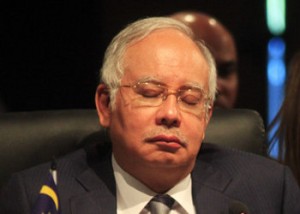
Poser for Najib, PAS chief Hadi Awang & The Selangor Sultan ? Who Should decide the next menteri besar.
Sorry, His Royal Highness Sultan you are supporting
PAS president Datuk Seri Abdul Hadi Awang yesterday told a stunned central committee meeting that he had offered Azmin Ali to join the Islamist party with a few of his PKR members to form a unity government with Umno in Selangor.
Without interference from empty political rhetoric – the question is, who’s listening to them? conditions in the state are still unusual and abnormal.” It was specifically for these reasons that the administration of the state had to be geared up within the ambit of a temporary legal scheme that allowed immediate policy interventions to be made without delay. No one, least of all the framers of our constitution would have imagined that these short-term concessions would become a permanent feature in our polity.Is just being good at your job really still enough?For a long time, it was only results that mattered. As long as you delivered those, people tended not to be overly concerned about how the job got done. It didn’t matter if you had to pull a last-minute all-nighter, or re-jigger everything in the system that could ever be jiggered. You were kind of a black box where needs went in and something came out to meet those needs.
Which way is the political wind blowing?It showed complete disregard . Are we a Democracy or a Monarchy? Somebody is very confused and causing us nothing but Anarchy. this contentious and misunderstood provision of the Constitution .Who do we believe?It looks like the Selangor political crisis is turning into a constitutional crisis.and what is assertive royal command—a titah—by the Sultan of Selangor dangers of perpetuating this so call provision beyond,in the Constitution of Malaysia The inevitable has happened, though some might argue that it happened too soon for comfort. some sort of sacred and untouchable covenant is doing more harm than good to the development of the state. The framers of our Constitution were in the dark about. ..For that is exactly how the royal house came crashing down. The Sultan stated that the prerogative of choosing the MB was entirely his and that the choice would be subject to the suitability or qualifications of the candidate. He also said he would follow convention, or what has been the practice in the past.plotting, planning and conspiring towards becoming the next occupant of a quickly crumbling throne. was borne to power precisely by deep popular disgust at such disorder, such power corruption, such bitter rivalries, such lusty hankering after power that apparently took precedence over everything – including national interest it indicated the breakdown of proper communication between the Sultan of Selangor and his loyal subject was similarly marred by bitter power feuds, rival centres within the same government frequently whispering serious allegations about each other, leaking stinging disclosures, his subjects elects their state assemblyman and the Aduns elects the M.B. That is based on our state constitution and convention. The sultan as pointed by Law experts have no power to request any extra names. The person offered for the M.B post must satisfy the criteria that he or she has majority support.Wan Azizah has already shown her majority support . The sultan has to appoint Azizah and there is no need to submit any other names
she is chosen by its members to be its President and the majority people of Kajang to be its member of the Constituent state assembly woman and is not just the wife of somebody. If there is a woman in BN that fit this bill, by all means appoint her to be at any position she deserved which is only appropriate. If Sultan doe not respect the constitution, someone should advice HRH that this set a very dangerous precedent. Someone may do something, then the Sultan has no protection under the Constitution of Malaysia All this happened because of weak leaders in office. If our P.M is a real statesman he would come out and defend the constitution. But instead he is gleefully enjoying and participating in the sandiwara.


No comments:
Post a Comment