
“TRUE PEACE IS NOT MERELY THE ABSENCE OF TENSION; IT IS THE PRESENCE OF JUSTICE.” -MARTIN LUTHER KING JR.
Throughout history, mass atrocities only came to an end through limited means. The scourge of large-scale torture, rape and murder was either stopped by the tireless and creative work of diplomats or came to a natural end — sadly, usually when one side wiped out the other. If criminal leaders and their governments did lose power, they were never prosecuted. Instead, they enjoyed wealthy exile under the protection of powerful allies. The survivors of such ousted regimes had to strive for peace without any redress for the crimes inflicted upon them by their own governments. This paradigm has since changed, due to the legal principles derived from Nuremberg, Tokyo, other subsequent World War II trials. Moreover, the experiences of countries that chose to prosecute their former leaders further led to the emergence of an alternate option for ending carnage and instituting peace.
The first international instance of this new option is the International Criminal Tribunal for the former Yugoslavia (ICTY), which was established prior to the end of the Yugoslav conflict of the 1990s and continues its work today. Indictments of high-ranking government and military officials were issued during that conflict, which complicated, but more so helped the diplomatic efforts to stop the violence. The ICTY drew largely from its post-World War II tribunal predecessors. Yet it also drew from the lessons learned by European and Latin American countries in the 1970s and 1980s that decided to prosecute their removed, criminal leaders in fair trials as part and parcel of their democratic transitions. Today, the International Criminal Court (ICC) — celebrating its tenth year of operation and recently its 121st State Party – is the first and only permanent international court to prosecute the international crimes of genocide, crimes against humanity, and war crimes (or atrocity crimes). By virtue of its permanence, the ICC is looked upon to address threats to and restore international peace and security.
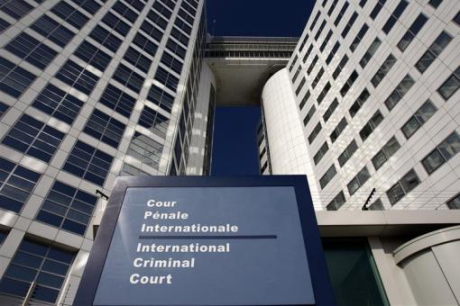 (Photograph: Reuters/Jerry Lampen)
While diplomats usually cherish having more tools in their toolbox, the onset of international criminal justice has not been uniformly welcomed by the international diplomatic corps. Coined the “Peace vs. Justice” debate, government leaders, diplomats, lawyers, journalists and commentators argue over the international affairs topic du jour: Are criminal prosecutions or diplomatic compromises (i.e. offers amnesty or exile) better at both stopping atrocities and installing peace? The most logical conclusion to such a question is that the two should not be mutually exclusive. Traditional diplomacy and international prosecutions both have roles to play and must act in concert, either in ongoing or post-conflict settings. Accepting this basic premise of coexistence, the more pressing issue of prioritizing diplomacy and justice can be addressed. While the case-by-case circumstances of each conflict always matters, the question remains what standard playbook should the global community employ when confronted with the mass perpetration of international crimes?
With respect to this question, two New York Times op-eds firmly prioritized diplomacy above justice. Focusing on ongoing conflicts, Alex De Waal of the World Peace Foundation at Tufts University opines that aggressive regime change through humanitarian and international justice interventions makes ending slaughters more difficult. He believes that criminal tyrants and governments, for the most part, only use violence to achieve political ends, and history shows that using diplomacy to help them attain their goals are what stop mass atrocities. According to Mr. De Wall, aside from Nazis’ Germany and Hutus’ Rwanda, most conflicts plagued by criminal events are not “bottomless massacres.” He uses the current Nubu Mountain conflict in South Sudan as evidence that the international community’s failure to concentrate on diplomacy, and its “laudable” flirtation with “prosecuting the perpetrators of crime,” makes it harder to obtain workable solutions.
In even starker terms, Ian Paisley of the British Parliament — who is intimately familiar with peace efforts in his native Northern Ireland — titled his opinion piece “Peace Must Not Be the Victim of International Justice.” Citing the $1 billion price tag and “poor record” of the ICC, Mr. Paisley argues that international justice interventions are more often than not divisive in post-conflict settings. For him, the ICC should be left to deal solely with completely failed states or conflicts where diplomacy efforts are not “viable.” His conclusion is that justice must be secondary to achieving peace through reconciliation and diplomacy, “[t]he wheels of justice must be allowed to turn at their own pace, but that they must not impede the peace process.readmore http://muslimmalaysia786.wordpress.com/2012/07/05/peace-vs-justicetrue-peace-is-not-merely-the-absence-of-tension-it-is-the-presence-of-justice/


No comments:
Post a Comment