
The Dangers of Judicial Corruption
 By William Leong Jee Keen (received by e-mail and edited by Din Merican)
Tay Choo Foo, a Barisan Nasional-friendly businessman, has lost all confidence in the Malaysian Judiciary. When he was sued, he was sure the courts would throw out the case. To Tay, the claim was a fabrication of lies.
To his horror, the court accepted the hearsay evidence from the claimant’s witness and threw out his testimony. The High Court ordered him to pay RM13 million. The Court of Appeal and the Federal Court upheld the High Court judgment. Tay feels like a victim of sexual assault; he feels violated except he does not have a video to prove it.
Alexander Hamilton warned of Injustice
Tay now realises from bitter experience what Alexander Hamilton (right) warned Americans in 1787, more than 200 years earlier in the Federalist Papers, that: “A steady, upright and impartial administration of the laws” is essential because “no man can be sure that he may not be tomorrow the victim of a spirit of injustice, by which he may be the gainer today.”
 1787, more than 200 years earlier in the Federalist Papers, that: “A steady, upright and impartial administration of the laws” is essential because “no man can be sure that he may not be tomorrow the victim of a spirit of injustice, by which he may be the gainer today.”
Tay is writing a book entitled ‘Lawless’ to warn Malaysians of the dangers of judicial corruption and to stir citizens into action. The question is whether Malaysians, having been warned, will act on it. When it mattered most, Malaysians did not act.
 In 1988, Malaysians did not speak out when Dr Mahathir Mohamad sacked the Lord President, Tun Salleh Abas and the five Federal Court judges. In 1998, many stood by when he sacked Anwar Ibrahim, his Deputy Prime Minister and the courts convicted and put him in jail for six years.
The Federal Court judges, who had dedicated their entire career to the principle of upholding the Rule of Law, became victims of the Rule of Man. They suffered a grave injustice at the hand of Mahathir in being sacked, disgraced and robbed of their personal dignity and self-esteem. The monetary payment given 20 years later by Prime Minister Abdullah Badawi can never compensate for their pain and suffering.
An even graver injustice was visited on Anwar Ibrahim when he was arrested, beaten and imprisoned for a crim was imprisoned for political purposes.e he did not commit. All this was done for the sole purpose of destroying his political career in order to prolong that of others. It is not just heinous, it is evil. The Federal Court judges were sacked and the Deputy Prime Mby theiinister was imprisoned for political purposes.
Economic entities also gain influence over the courtsMalaysians by their timidity and indifference allowed political powers to exert influence over the Judiciary for political ends. They did not realise that like in all usual public private initiatives, economic entities would also gain influence over the courts. Thus were spawned judicial decisions that:
- Interfered with the shareholding control of a public listed company such as the infamous Insas Bhd v Ayer Molek Rubber Co Bhd [1995] 2 MLJ 833;
- Allowed multi-million ringgit defamation suits against MCG Pillay, Param Cumaraswamy, Raphael Pura, Tommy Thomas and Skrine & Co for writing about judicial corruption;
- Allowed contempt cases to be instituted against Zainur Zakaria, Tommy Thomas, Manjit Singh and prosecution of Karpal Singh who dared to challenge the unfairness of court proceedings;
- Allowed a forger to acquire indefeasible title to property such as the Federal Court decision in Adorna Properties v Boonsom Boonyanit [2001] 1 MLJ 241 that made our country a forger’s haven for 10 years until corrected by the case of Tan Ying Hong v Tan Sian San [2010] 2 MLJ 1 FC;
- Ordered an insurance company to pay an arsonist who set fire to his own factory to claim on his insurance policy and dismissed the insurance company’s application for review in Asean Security Paper Mill v Mitsui Sumitomo Insurance (Malaysia) Bhd [2008] 5 AMR 377.
In Tay’s case, the administrators of the estate of Tunku Mansur (deceased) sued him for the purchase price of 1.2 million Harrisons Holdings Berhad shares. Tay contended that the shares were given to him by Tunku Mansur as commission for arranging an investor to participate in the management buy-out led by Tunku Mansur.
The High Court allowed the hearsay evidence of a purported conversation between the witness and Tunku Mansur to be admitted under section 32(1) (b) of the Evidence Act. Until the Federal Court upheld the High Court decision, section 32(1) (b) of the Evidence Act is accepted of only allowing a statement made by a deceased clerk in the entry of account books and records kept in the ordinary course of business.
Tunku Mansur was not a deceased clerk but a respected member of the Kedah Royal Family and an outstanding and high powered corporate executive, and the statement was not an accounting entry or documents kept in the ordinary course of business. The Federal Court held that section 132(1) (b) should be given a broad and liberal interpretation. The Federal Court decision adopted a new approach that differed from what lawyers and academicians knew about section 32(1) (b).
The decision may be a development of the law but it gave rise to the issue of satisfying the requirements of certainty and predictability which is so essential to the legitimacy of judicial decisions. There are many more cases that are not reported.
I have a friend who lost his family business built over several generations to a third party despite non-compliance of the clear provisions of the law. He dared not challenge the matter in the courts because the third party is well connected. Political connections matter in Malaysia, not the Rule of Law.
Many are suffering in silenceIf the rich are fearful to fight for their rights, the weak, the poor and the disadvantaged have no chance at all. Many are, therefore, suffering in silence. This is because we did not speak up when it was needed to.
In 2008, this cycle of political interference has been repeated. The 2nd edition of the Anwar Ibrahim (Sodomy 2) trials was instituted to clip the opposition’s momentum after the 12th general election. The Guardian in its strongly worded editorial on December 13, 2011 described what the Malaysian courts will do to Anwar as an egregious travesty of justice. The last vestiges of the Judiciary’s legitimacy will be lost on January 9, 2012 if Anwar is convicted of a crime he did not commit. All evidence presented by experts in his defence has been ignored.
The public knows there is a clear distinction between a legitimate system of law and a mere system of commands forcibly enforced. It is not necessary for the public to be lawyers or legally trained to know whether a judicial decision is legitimate or not. Each of us has a built-in antenna that can sense the truth from a lie, and whether a judicial decision is fair or unjust.
The public can detect Judges, who while hiding behind a veneer of fairness, make intellectually dishonest decisions. They make procedural and evidential rulings to admit into evidence facts favourable to the outcome they want. They shut out facts that would make it inconvenient for them to arrive at the desired outcome. They are thus able to write impeccable decisions by adopting the applicable laws to the selected evidence.
However, to the losing litigant and the public such decisions are complied with only because of the coercive force the Court can bring to bear. The decisions are not accepted as expressions of legal and valid authority. They totally lacked legitimacy.
It is public confidence that gives legitimacy to the judiciary and its decisions. To enjoy public confidence the Judiciary must honour the values and principles of consistency, coherence, legal certainty, predictability and not the least justice and objectivity. The civil society must always be vigilant and remind the Judges of their sacred duty to uphold the law and administer justice.
Judges “must be incorruptible”, said US Supreme Court Justice Day O’Conner
Sandra Day O’Connor said: “If judges are to be independent guardians of Rule of Law values, they must be incorruptible. Judges are entrusted with ultimate decisions over life, freedoms, duties, rights, and property of citizens.
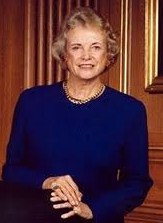 must be incorruptible. Judges are entrusted with ultimate decisions over life, freedoms, duties, rights, and property of citizens.
“But judges will never win the respect of the citizens if they are subject to corrupt influences. Whenever a judge makes a decision for personal gain, or to curry favour, or to avoid censure, that act denigrates the Rule of Law… If the Judiciary is perceived as being corrupt, biased, or otherwise unethical, society’s confidence in the legal system and its respect for the Rule of Law will crumble.”
‘Anwar Trials lacked legitimacy’The public is aware that the two Anwar Ibrahim trials in the late 1990s lacked legitimacy:
- In the first, Anwar Ibrahim’s trial for corruption, the judge attracted adverse worldwide criticism for the manner he conducted the trial. The Judge threatened and charged defence counsel with contempt for complaining the court was not impartial and fair.
The words “Irrelevant! Irrelevant! Irrelevant!” were uttered so often that it was only matched 10 years later by a subsequent refrain of “Correct! Correct! Correct!” The trial did not meet the requirement of impartiality, justice and objectivity.
- In the second, Anwar Ibrahim’s first trial for sodomy, the High Court judge had applied the wrong law in convicting Anwar. It is a well established law that the court cannot convict on uncorroborated evidence of the complainant in a sexual offence. The Judge can only do so upon reminding himself of the danger of convicting on uncorroborated evidence.
The Judge is required to set out in his judgment the reasons he found the complainant’s evidence were sufficiently convincing to establish the case beyond reasonable doubt. The High Court Judge failed to do this, and the Court of Appeal failed to pick up this error.
It was only after the change of Prime Ministers that the Federal Court pointed out that the complainant’s evidence lacked credibility and that the confession of sodomy was extracted by torture and improper means. The trial did not meet the standards of consistency and coherence to existing legal principles.
 In the 2008 edition of the Anwar trials, Ragunath Kesavan (left), then chairperson of the Malaysian Bar Council, said that the Federal Court’s decision to dismiss Anwar’s application for access to key evidence was a regressive decision. The decision contradicted the clear language and intent of Parliament in section 51A of the Criminal Procedure Code.
The section imposed on the prosecution a statutory duty to provide to the accused before the commencement of the trial the documents that the prosecution intended to use at the trial. This was made in the interest of enhancing an accused person’s right to a fair trial.
By barring Anwar access to CCTV footage, medical reports, chemist reports and witness statements, Anwar was severely and unfairly impaired in defending himself. The Federal Court decision did not meet the standard of coherence, consistency, certainty and predictability, impartiality and justice.
Anwar applied under Rule 137 of the Federal Court Rules 1995 to review the Federal Court’s decision in dismissing his application for disclosure under section 51A Criminal Procedure Code. The second Federal Court dismissed the application on the ground that the Federal Court does not have jurisdiction to review an earlier Federal Court decision.
Former Judge NH Chan said that the decision fly in the face of the plain words of Rule 137. Rule 137 provides that nothing shall be deemed to limit or affect the inherent powers of the court to hear any application or make any order as may be necessary to prevent an abuse of the process of the court. The Federal Court decision was clearly incoherent and inconsistent with the clear words of the Rule.
The trial was filled with rulings on procedural and evidential matters that left the public with the distinct feeling that the decisions did not satisfy the standards and values of impartiality, legality, certainty, predictability, transparency and justice.
‘A bad taste in the mouth’International and domestic observers with a sense of fair play have a bad taste in the mouth at the injustice perpetrated. The New York Times in an article published on December 13, 2011 reported that human rights groups, including Amnesty International and Human Rights Watch have criticised the trial.
Condemnation has also come from Al Gore, former US Vice President who, with Paul D  Wolfowitz (right), the former US Deputy Secretary of Defence, wrote in the Wall Street Journal that the trial “threatens not just Mr Anwar but all those who have struggled for a freer and more democratic nation”.
 Wolfowitz (right), the former US Deputy Secretary of Defence, wrote in the Wall Street Journal that the trial “threatens not just Mr Anwar but all those who have struggled for a freer and more democratic nation”.
Malaysians had twice missed the call to stand up and speak out against injustice in 1988 and 1998. If we miss the third chance on January 9, 2011, it will be strike three and Malaysia shall be struck out.
It is, therefore, not inappropriate to recall the famous words of Martin Niemoller who emerged as an outspoken public foe of Adolf Hitler:
“First they came for the Socialists, and I did not speak out
Because I was not a Socialist;
Then they came for the Trade Unionists and I did not speak out
Because I was not a Trade Unionist;
Then they came for the Jews and I did not speak out
Because I was not a Jew;
Then they came for me- and there was no one left to speak for me.”
Because I was not a Socialist;
Then they came for the Trade Unionists and I did not speak out
Because I was not a Trade Unionist;
Then they came for the Jews and I did not speak out
Because I was not a Jew;
Then they came for me- and there was no one left to speak for me.”
Niemoller’s quotation reminds us that the people were complicit through their silence in the Nazi imprisonment, persecution and murder of millions of people. We will similarly by our silence be complicit in the erosion of our society’s foundation.
By staying neutral, by keeping silent, we will allow the Rule of Law to be replaced by the Rule of Man, criminals to go unpunished, the innocent to be denied of a fair trial, the poor losing out to the rich and the strong over the weak.
 This country has deteriorated not because of bad people but because good people did not stand up and speak out against injustice. Edmund Burke said, “[A]ll that is necessary for the triumph of evil is for good men to do nothing.” Tay is now standing up and speaking out. Many more must do so otherwise, they will take Anwar, then Tay and when they finally come for you, no one will be left to speak for you.
The end of U.S. military involvement in Iraq coincided with Bradley Manning's military hearing to determine whether he will face court-martial for exposing U.S. war crimes by leaking hundreds of thousands of pages of classified documents to Wikileaks. In fact, there is a connection between the leaks and U.S. military withdrawal from Iraq.
When he announced that the last U.S. troops would leave Iraq by year's end, President Barack Obama declared the nine-year war a "success" and "an extraordinary achievement." He failed to mention why he opposed the Iraq war from the beginning. He didn't say that it was built on lies about mushroom clouds and non-existent ties between Saddam Hussein and Al Qaeda. Obama didn't cite the Bush administration's "Plan for Post-Saddam Iraq," drawn up months before 9/11, about which Former Treasury Secretary Paul O'Neill reported that actual plans "were already being discussed to take over Iraq and occupy it - complete with disposition of oil fields, peacekeeping forces, and war crimes tribunals - carrying forward an unspoken doctrine of preemptive war."
Defense Secretary Leon Panetta also defended the war in Iraq, making the preposterous claim that, "As difficult as [the Iraq war] was," including the loss of American and Iraqi lives, "I think the price has been worth it, to establish a stable government in a very important region of the world."
The price that Panetta claims is worth it includes the deaths of nearly 4,500 Americans and hundreds of thousands of Iraqis. It includes untold numbers wounded -- with Traumatic Brain Injury and Post Traumatic Stress Disorder -- and suicides, as well as nearly $1 trillion that could have prevented the economic disaster at home.
The price of the Iraq war also includes thousands of men who have been subjected to torture and abuse in places like Abu Ghraib prison. It includes the 2005 Haditha Massacre, in which U.S. Marines killed 24 unarmed civilians execution-style. It includes the Fallujah Massacre, in which U.S. forces killed 736 people, at least 60% of them women and children. It includes other war crimes committed by American troops in Qaim, Taal Al Jal, Mukaradeeb, Mahmudiya, Hamdaniyah, Samarra, Salahuddin, and Ishaqi.
The price of that war includes two men killed by the Army's Lethal Warriors in Al Doura, Iraq, with no evidence that they were insurgents or posed a threat. One man's brain was removed from his head and another man's face was skinned after he was killed by Lethal Warriors. U.S. Army Ranger John Needham, who was awarded two purple hearts and three medals for heroism, wrote to military authorities in 2007 reporting war crimes that he witnessed being committed by his own command and fellow Lethal Warriors in Al Doura. His charges were supported by atrocity photos which have been released by Pulse TV and Maverick Media in the new video by Cindy Piester, "On the Dark Side in Al Doura - A Soldier in the Shadows." CBS reported obtaining an Army document from the Criminal Investigation Command suggestive of an investigation into these war crimes allegations. The Army's conclusion was that the "offense of War Crimes did not occur."
One of the things Manning is alleged to have leaked is the "Collateral Murder" video which depicts U.S. forces in an Apache helicopter killing 12 unarmed civilians, including two Reuters journalists, and wounding two children. People trying to rescue the wounded were also fired upon and killed. A U.S. tank drove over one body, cutting the man in half.
The actions of American soldiers shown in that video amount to war crimes under the Geneva Conventions, which prohibit targeting civilians, preventing the rescue of the wounded, and defacing dead bodies.
Obama proudly took credit for ending U.S. military involvement in Iraq. But he had tried for months to extend it beyond the December 31, 2011 deadline his predecessor negotiated with the Iraqi government. Negotiations between Obama and the Iraqi government broke down when Iraq refused to grant criminal and civil immunity to U.S. troops.
It was after seeing evidence of war crimes such as those depicted in "Collateral Murder" and the "Iraq War Logs," also allegedly leaked by Manning, that the Iraqis refused to immunize U.S. forces from prosecution for their future crimes. When I spoke with Tariq Aqrawi, Iraq's ambassador to the United Nations, at a recent international human rights film festival in Vienna, he told me that if they granted immunity to Americans, they would have to do the same for other countries as well.
Manning faces more than 30 charges, including "aiding the enemy" and violations of the Espionage Act, which carry the death penalty. After a seven day hearing, during which the prosecution presented evidence that Manning leaked cables and documents, there was no evidence that leaked information imperiled national security or that Manning intended to aid the enemy with his actions.
On the contrary, in an online chat attributed to Manning, he wrote, "If you had free reign over classified networks... and you saw incredible things, awful things... things that belonged in the public domain, and not on some server stored in a dark room in Washington DC... what would you do?"
He went on to say, "God knows what happens now. Hopefully worldwide discussion, debates, and reforms... I want people to see the truth... because without information, you cannot make informed decisions as a public."
Manning has been held for 19 months in military custody. During the first nine months, he was kept in solitary confinement, which is considered torture as it can lead to hallucinations, catatonia and suicide. He was humiliated by being stripped naked and paraded before other inmates.
The U.S. government considers Manning one of America's most dangerous traitors. Months ago, Obama spoke of Manning as if he had been proved guilty, saying, "he broke the law." But Manning has not been tried, and is presumed innocent in the eyes of the law. If Manning had committed war crimes instead of exposing them, he would be a free man today. If he had murdered civilians and skinned them alive, he would not be facing the death penalty.
Besides helping to end the Iraq war, the leaked cables helped spark the Arab Spring. When people in Tunisia read cables revealing corruption by the ruling family there, they took to the streets.
If Manning did what he is accused of doing, he should not be tried as a criminal. He should be hailed as a national hero, much like Daniel Ellsberg, whose release of the Pentagon Papers helped to expose the government's lies and end the Vietnam War.
Marjorie Cohn is a professor of law at Thomas Jefferson School of Law and past president of the National Lawyers Guild. Her books include "Rules of Disengagement: The Politics and Honor of Military Dissent" and "The United States and Torture: Interrogation, Incarceration, and Abuse." See www.marjoriecohn.com.


From polling booth to high court - what a dance of democracy!


On December 20th, finally the Punjab and Haryana High Court Chandigarh bound the Speaker of Haryana Vidhan Sabha to de attach five deserter MLAs, namely Rao Narender Singh, Dharam Singh Chokar, Satpal Sangwan, Vinod Bhayana and Jile Ram Sharma with any political party and decided the disqualification petitions filed against them on or before April 30, 2012.
Court also asked the five deserters to not to occupy any office till the disposal of petitions.
What a dirty dance of democracy it’s been from the polling booth to the court. As the government has decided in principle to move Supreme Court of India (SCI) against the decision of Punjab and Haryana High Court, further delay is imminent.
Call it a co-incident or convenience of the government (read party) in power, the pace of proceedings of disqualification petitions of MLAs has kept changing with the change of guard as well as the requirement of party in power.
Mr Speaker, now the time has come when you have to ensure that the dignity of the institution of Vidhan Sabha is maintained that too at any cost. Else, it may discourage the electorate as well, besides setting a wrong precedent in the institution. Else, as apparent, the entire exercise could be termed as proceedings delayed to facilitate the party in power.
Ironically, it took more than a year for the then Vidhan Sabha speaker to complete the service of notices to five deserters of Haryana Janhit Congress (HJC) against whom the disqualification petitions were moved. Interestingly, the rule book related to serving of notices remained the same, staff on duty in Vidhan Sabha secretariat remained unchanged and the only thing changed was the person as well requirement of legislative party in power.
Sample this: It was in the year 2004 when Karan Dalal, the then MLA of Republican Party of India (RPI), Jagjit SIngh Sangwan of National Congress Party (NCP) and six other independent MLAs who opted for an associate membership of Congress party were unseated within two months of proceedings. Enquiries revealed that within half a dozen hearings Satbir Singh Kadian, the then speaker unseated all the eight MLAs from the house. All this happened when Indian National Lok Dal (INLD) was in power and Om Parkash Chautala was chief minister of Haryana.
This was followed by the disqualification of former chief minister Bhajan Lal, former minister Dharam Pal Malik and MLA Rakesh Kamboj in the year 2008. It was within the proceedings of not more then three months when all three were unseated as MLAs by the then speaker Ragbhir Singh Kadian. The three were disqualified after Bhajan Lal, the former CM floated Haryana Janhit Congress (HJCBL) as a protest after being dropped as the chief minister. Bhajan Lal had floated the party on December 2, 2007 following this three MLAs from Congress had moved disqualification petition against them.
What is there in the disqualification petition? The tribunal has ascertain as to whether the MLA or MP defected to another party from the party he or she was contested and won the elections.... quipped a former minister who is currently an MLA of the opposition party INLD.
Bound by party loyalty, a minister in chief minister Bhupinder Singh Hooda's cabinet admits that unwarranted delay was caused to protect the party but he cleverly changed the tone, “May be the speaker wants to ensure that an optimum opportunity of being heard has to be given to both the parties.”


No comments:
Post a Comment