
Ambiga should ask this Sri Gading MP to repeat his remarks outside Parliament and then take him to cleaners by suing him. Tengku Adnan as UMNO Secretary-General should, in turn, haul him up to face UMNO Disciplinary Board. It is serious since treason is punishable by death. –Din Merican 
Learn to harness your negative emotions to inspire yourself into action

Tengku Datuk Seri Adnan Tengku Mansor said.let Datuk Mohamad Aziz the dark knight rise Have you considered how a degree of negative emotion can be good for you? Anger and envy, for instance, can spur you on to greater efforts than were likely in the absence of such emotions. Companies and bosses use this understanding to their advantage, deliberately creating points of rivalry to nurture a competitive edge that encourages employees to contribute their b
Every lover understands and appreciates the role jealousy can play in fast forwarding a flagging relationship. Faced with a rival and the prospect of losing the lover, the beloved takes steps to cut out competition and firmly establish the tie. Teachers deliberately single out a student to praise and announce as a favourite, thus inspiring envy, competition and a need to excel among others. Parents subtly play off siblings against each other to achieve the desired behaviour among them.
Bosses do the same, by dropping hints of praise for a rival, or throwing two rivals into the same situation, then sitting back to reap the benefits as both employees deal with their negative emotions by working harder and better in an attempt to show each other down.
Literature has always recognised the benefits of the darker emotions. InWuthering Heights, an uneducated and unkempt Heathcliff is so torn by Catherine’s rejection of him as husband material in favour of Edgar that he disappears for a few years and returns rich and a ‘gentleman’. In The Count of Monte Cristo, Dantes wrongfully condemned to life imprisonment, keeps himself going through tough times by the strength of his anger and vengeance. He, too, returns rich, to wreak vengeance on those who wronged him. However, literature also points to the destruction caused by unresolved negative emotion. Heathcliff and Catherine’s unresolved passion for each other leads to destruction of not just their lives but of the others’ around them. Dantes’ revenge has devastating consequences not just for the guilty, but for the innocent too.
Today, expert studies tell us not to avoid negative emotions or leave them unresolved. Ignoring the darker emotions is just a way of postponing the inevitable and denying reality. Researchers hasten to add that uncontrolled negative emotions such as anger, fear, pain or jealousy are destructive, but it is even more harmful to ignore them. Prof George Vaillant, a psychiatrist at Harvard Medical School, reveals after research, “Negative emotions are often crucial for survival…We all feel anger, but individuals who learn how to express their anger while avoiding the explosive and self-destructive consequences of unbridled fury, have achieved something incredibly powerful in terms of overall emotional growth and mental health.”
Psychotherapists encourage us to indulge our full range of emotions because each emotion has something to teach us. Each emotion thus plays a critical role in our progress and mind-body healing process. In fact, in one survey, 55 per cent of the participants said a bout of anger had led to a positive result in office.
Accepting rather than rejecting a negative emotion takes the edge off its destructive power. If you live the emotion, you will be relieved of it and it may even help you. Psychotherapist Greenspan suggests we think of emotions as teachers. “Sorrow teaches us about interconnectedness. Fear is a survival instinct. And anger indicates that something’s wrong that must be made right.” To this I would add –– envy teaches us that we need to better ourselves; disappointment tells us our expectations are unrealistic or that we need to increase our own efforts; frustration tells us we are bored with present circumstances and it’s time for a change. Being stressed means we need to list our priorities; loneliness tells us we need to be connected; guilt tells us we have been unjust to someone or something and need to make amends.
This is how the darker emotions help motivate people to action and allow them to heal. As Leonardo di Caprio says in Inception in praise of the power of negative emotions, “Positive emotion comes from negative emotion all the time. We are all looking for reconciliation, a catharsis.”
Alan Newman. NZ Submitted on 2012/06/08 at 1:50 pm Am too far in NZ. Please could someone start a website and an int’l call for impeachment. The truth is more than enough for an impeachmt. Condoning & sheltering of multi-billion corruption & losses. Submarines & murder. Int’l bodies’ call for the arrest of Sarawak’s CM of … Read more … Read more
Alan Newman. NZ Submitted on 2012/06/08 at 1:50 pm Am too far in NZ. Please could someone start a website and an int’l call for impeachment. The truth is more than enough for an impeachmt. Condoning & sheltering of multi-billion corruption & losses. Submarines & murder. Int’l bodies’ call for the arrest of Sarawak’s CM of … Read more … Read more
 The Barisan Nasional (BN) today played down an UMNO lawmaker’s call for BERSIH chief Datuk Ambiga Sreenevasan to be hanged for treason, saying it was not the ruling coalition’s stand in what seems to be a bid to arrest its sliding popularity ahead of key national polls.
“What was mentioned by the Sri Gading MP, Datuk Mohamad Aziz (left), in the Parliamentary session yesterday (June 26, 2012) suggesting that the organiser of the Bersih Assembly, Datuk S. Ambiga, be hanged to death by linking her to the Al-Ma’unah militants for attempting to create disorder and overthrow the government of the Yang di-Pertuan Agong is personal and not BN’s stand.
“I would like to stress that Barisan Nasional upholds the MalaysianConstitution and the rule of law and the BERSIH Assembly case is still being investigated by the authorities,” BN Secretary-General Tengku Datuk Seri Adnan Tengku Mansor said.
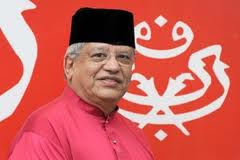 Constitution and the rule of law and the BERSIH Assembly case is still being investigated by the authorities,” BN Secretary-General Tengku Datuk Seri Adnan Tengku Mansor said.
The two-paragraph media statement came just hours after the MIC President, Datuk G. Palanivel, called on Prime Minister Datuk Seri Najib Razak and BN leaders to put a stop to the relentless attacks against the electoral reform chief.
“It is not right for a Member of Parliament to say that Datuk Ambiga should be hanged.In fact, no Member of Parliament should make this kind of a remark,” Palanivel said in statement sent by his aide via text message.
Palanivel also questioned why Ambiga has been made a “scapegoat” and appeared to be the only target of criticism over the BERSIH rally for free and fair elections.
“Why didn’t these people demonstrate or put up burger stalls in front (the houses) of other BERSIH leaders?” he asked, referring to a recent protest by anti-BERSIH proponents outside Ambiga’s house.
“The Prime Minister and other BN leaders should put a stop to this matter. Such remarks will affect Indian voters who are turning towards BN now,” he added.
Mohamad had last night called for Ambiga to be hanged for the “treasonous” act of organising the April 28 BERSIH rally, which the ruling BN has claimed was an attempt to topple the Najib Administration.
The Sri Gading MP had compared the BERSIH chief to a militant Muslim group that had tried to overthrow the government in 2000 and were eventually sentenced to death by hanging for “waging war against the King,” the first people to be convicted of the offence.
“Shouldn’t we also hang Ambiga for treason towards the Agong? Traitors should be punished as harshly as possible,” Mohamad told Parliament when debating the supplementary supply bill last night.
Pakatan Rakyat (PR) lawmakers had accused the UMNO MP of abusing his parliamentary immunity and demanded action be taken against him for stirring racial hatred.
The Opposition lawmakers pointed out that parliamentary immunity is still limited to provisions in the Federal Constitution, adding that the Sri Gading MP could still be investigated by police for his remarks.
 At a press conference here, DAP secretary-general Lim Guan Eng said he would direct all elected representatives from the party to lodge simultaneous reports against Mohamad for the latter’s “samseng-like”, “seditious”, “racist”, “repulsive”, “repugnant” and “derogatory” remarks against Ambiga, who is the co-chair of election watchdog BERSIH.
“Clearly these remarks are inflammatory, designed to stir disaffection, extremism and racism… it was directed against her because she’s a woman, Hindu and Indian,” the Bagan MP said.
“This is the first time in history that a lawmaker is demanding for the murder of someone,” he added.
Lim noted that although Article 63 of the Federal Constitution grants immunity to a parliamentarian when addressing the august House, there are several exceptions, particularly when the remark uttered has racial undertones or is an attack on the Yang di-Pertuan Agong.
Ambiga personally appeared tickled by Mohamad’s remark instead of being incensed.“ ‘Off with her head!’ Sounds like Alice in Wonderland! The statement, of course, reflects more on the maker than on me,” Ambiga said in response to Mohamad’s remark.
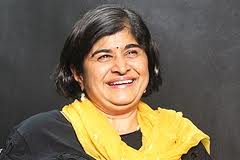 incensed.“ ‘Off with her head!’ Sounds like Alice in Wonderland! The statement, of course, reflects more on the maker than on me,” Ambiga said in response to Mohamad’s remark.
The prominent lawyer-activist was able to maintain her composure and even pressed the UMNO MP if BERSIH’s eight demands for electoral reform would be implemented before the 13th general elections, which must be called by next year.
Together with national laureate Datuk A. Samad Said, Ambiga led a massive public rally for the voter roll to be cleaned of dubious entries, for which she has been repeatedly branded a “traitor” by right-wing elements within the pro-BN establishment.
They have also demanded that she is stripped of her citizenship.“The offer by civil society to help with the cleaning up of the electoral roll still stands, and as he is an elected MP, I believe the public would be more interested in his response to these critical questions,” Ambiga said.
She added, “As for treason, asking for free and fair elections is not treason. Giving away citizenship for votes is.”
During the Anna Hazare movement, a puzzlingly important role was played by a variety of spiritual leaders. We had the Baba Ramdev soap opera that ended badly in sari-drenched absurdity, Sri Sri Ravi Shankar in dulcet huddles with Anna, and a curious gentleman by the moniker of Bhaiyuji who surfaced mysteriously and played a role of unspecified importance in the negotiations with the representatives of the government. And while the movement attracted people from different sections of society, including mandatory film stars and not very famous celebrities, eager to be seen and heard, the fact that these Godmen were not only present but were called upon to play key roles needs some reflection.
The Godmen involved in the Anna Hazare-led movement have little in common- one is a yoga guru famous for fierce palpitations of the stomach, that has won him a middle class constituency, another a guru catering to white collar misery and the need for beatific consolation, while the third one comes without a known constituency, antecedents and the hirsute persona otherwise deemed mandatory for entry into guru-dom. What unites them is thus nothing other than their apparent other-worldliness, and what makes them suitable for the role that they were asked to play or insisted successfully on playing, is nothing more than the fact that they are spiritual leaders with constituencies.
The need for Godmen comes from two opposite ends of the spectrum. They attract both those who have failed unreasonably and those who have succeeded inexplicably; in both cases there is a need to make sense of the universe and explain how the individual fits in into some larger and perhaps grander design. The need is to become a tile on someone’s floor, a counter in some divine board game where there are some rules that are invisible to the players involved and need a divine middleman to decode the mysterious ways of the universe. The Godman is an agent of scrutability which he renders in a language that is faintly familiar and vaguely unintelligible. He is a manicurist of guilt and exorcist of doubt; he embraces the grey areas of our life, those very sectors that everyone else avoids, and creates a field of plausible causality around these. We follow Godmen because we need to escape the individual nature of our existence, and immerse ourselves in something larger, something we apprehend but do not quite comprehend. The act of wilful immersion in something larger is liberating and the explanations follow in a self-enclosing and self-justifying universe of circular reasoning. The need to be reduced, to be infantilised again so that we can see the world from a vantage point that is otherwise unattainable to us is a powerful one and spans across social and economic class. Godmen mobilise doubt and harness anxiety into a state of equilibrium, and in doing so win self-induced suspension of disbelief from their followers, who follow them in a form of wakeful sleep that is both blissful and self-regenerating.
In many ways, Godmen are truly and perhaps in the most complete sense of the word, middlemen. They mediate between matters of the earth and sky, worldliness and the transcendental, belonging and detachment, surface and depth, ritual belief and individual awakening. They belong to this world, dealing with matters of money and power while pursuing an agenda of other-worldliness. They cater to the wealthy and powerful as well as the destitute and adrift. They are a magnet for the famous, who in turn help to make them famous and legitimise the power that they possess. They talk of things spiritual but need to flaunt their material power as a sign of their spiritual potency. The stronger the spirituality of the leader, the larger must be his fleet of cars, the greater the acreage of his ashram, and the richer the bank accounts of the trust he runs. A Godman is the ultimate alchemist as he freely trades in opposites, converting one antonym into another. He belongs everywhere and nowhere, dealing in everything and nothing.
It is this quality that makes him invaluable as a mediator. Wearing a shroud of culturally-enabled legitimacy for they are after all, holy men, Godmen are middlemen of unclassifiable power representing an undefined constituency. Unlike the politician whose constituency is often paid for, the Godman enjoys the distinction of have true followers and audiences that come of their volition in very large numbers to hear their leader. Nothing sticks to him, no scandal, no television sting expose, no allegation of embezzlement, molestation or murder- the spiritual guru enjoys immunity of a kind that politicians have done so far, only with far greater legitimacy. In some ways, the spiritual leader is a politician of a different religion, wearing saffron instead of white, dealing in prescriptions instead of promises and attracting believers instead of voters. If the politicians find themselves channelizing the potent power of the state, the Godmen funnel the even greater and more intangible belief in the divine.
The Jan Lokpal movement represents a de-institutionalisation of democracy as it moves from being an alien ritual performed with awkward hesitancy to something that is owned and practised with cultural self-confidence. As democracy breaks out of its institutional straitjacket and spills over into the realms of cultural practice, it will begin to absorb the larger forces at work in society. The inclusion of Godmen into the mainstream political discourse might not ne a one-time phenomenon but a sign of things to come. In the use of democracy as a mode of public expression rather than ritual enactment of a political system, lies a new engagement with it which will be at once more real and more fragmented and chaotic. The separation of politics from life is about to end, and one by-product of that is that we have may have read about people like Bhaiyuji Maharaj more often than we have imagined.TV’s “action news” mantra remains: “when it leads, it bleeds”. It was police violence that initially turned a minimised story into a dominant one. Protests that had been ignored – and laterS - were suddenly newsworthy when authorities validated them by cracking down. The press thrives on conflict. An Umno federal lawmaker accused Datuk Seri Anwar
… Read more SRI GADING JUMP OUT THE CUCKOO’S NEST TO RIDUCLATE “PERMATANG PAUH THE IDEAS AND VISION BEHIND OCCUPY ACTIVISM
… Read more SRI GADING JUMP OUT THE CUCKOO’S NEST TO RIDUCLATE “PERMATANG PAUH THE IDEAS AND VISION BEHIND OCCUPY ACTIVISM
No comments:
Post a Comment